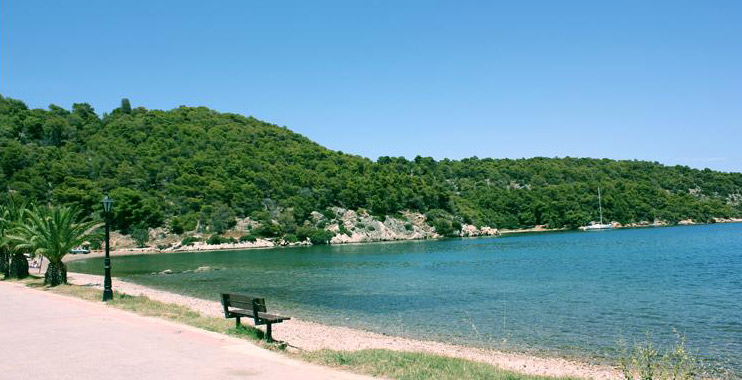
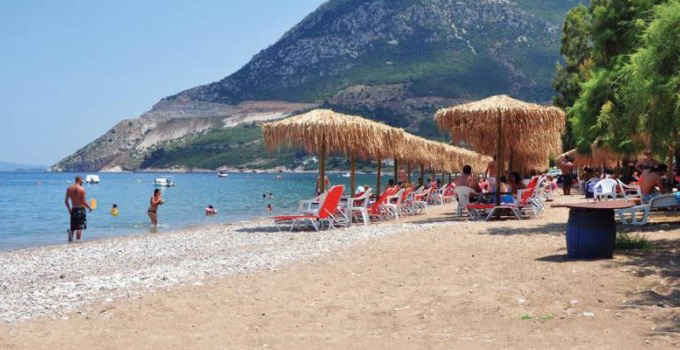
La plage de Vagionia se trouve au nord- est, à droite du port d’Épidaure, derrière l’église de Saint Nicolas. Elle est toute verte, des eaux crystallines, sans trop de chaises longues, quelques parasols en paille seulement sur les cailloux et le sable.
La plage est assez grande et il y a de la place pour tout le monde. La verdure offre un ombrage naturel à ses visiteurs estivaux alors que ses rythmes sont lents et reposants.
Polemarcha se trouve à côté d’Épidaure et en réalité il s’agit de deux plages magnifiques sous les pins sans aucune trace d’organisation.
À la petite église de Panagitsa, on trouve cette plage. Une beauté extraordinaire avec ses cailloux blancs et ses eaux crystallines. On peut y avoir accès en voiture et se trouve au bout du village à côté de la plage Yalassi.
La plage de Panagitsa n’est pas organisée et elle est entourée des rochers et des pins et il y a de gros cailloux.
Yalassi est considerée comme la plus grande plage de la région, elle dispose de petits cailloux blancs et des eaux transparentes. On y trouve des campings organisés ou non et elle constitue un point d’attraction pour les jeunes, alors qu’elle est idéale pour les jeunes enfants.
Les eaux crystallines en turquoise de la plage sont très hospitalières et attrayantes, alors que le visiteur prend conscience qu’il se trouve dans un petit paradis isolé.
Elle est à 2 km du centre du village et il y a des beach bar.
La plage Gkliati ou Kalymnios se trouve près de Yalassi, à l’autre bout de la plage de Panagitsa à Épidaure d’Argolide.
Les eaux propres de Gkliati avec du sable et de petits cailloux s’offrent pour des plongées calmes.
Les eaux de Gkliati sont charmantes aussi bien à les voir de loin que de s’y baigner. De plus dans la mer il y a une partie de la cité antique submergée qui pour 23 siècles avait caché toute une civilisation, chose qui la rend idéale à explorer.
In a canyon, in 340 BC, an Argos architect Polykleitos the Younger, built, according to Pausanias, the theatre of Epidaurus. Among all the ancient theatres, Epidaurus theatre is the most beautiful and best preserved. Destined for the fun of the patients of Asklipieio, it had a capacity of 13,000 spectators. It was divided into two parts: A 21-rows of seats part, aimed for the citizens and a 34-rows of seats part aimed for the priests and rulers. The superb acoustics as well as the very well preserved construction, contributed to the creation of Epidaurus Festival S.A., an institution that contributed to the cultural revival of the theatre. Great actors have acted at such as Alexis Minotis, Thanos Kotsopoulos, Anna Synodinou, Thanasis Vengos and the famous Greek soprano Maria Kallas.
Excavations and buildings
The excavations at Epidaurus were executed by P. Kavadias and lasted from 1881 until his death. The excavations were undertaken by the Archaeological Society. Important role in the course of the excavations was the selfless offer of the residents of Lygourio, who, apart from their help, offered their land located near the archaeological site. The first area that the visitor faces upon reaching the archaeological site is the entrance. The entrance, which construction dates back to the Mycenaean times, consisted of two galleries with 6 columns each, built in Ionian and Corinthian type. The second building is the temple of Asclepius, which construction lasted for 5 years. It was a Doric temple where Asclepius statue was hosted. The statue was made by Thrasymedes from Paros Island. Behind the temple there was the dome, which was the most famous building of the sanctuary. Other buildings were the house of priests, the temples to Artemis, the temple of Apollo and finally the theatre.

The small theater of Ancient Epidavros was established in the Acropolis of the ancient city of Epidavros at the South-Western slope, before the period of Asklepios.
It was used mainly for the events of the Dionysian cult, so it was dedicated to the god Dionysus. From the dedicatory inscriptions, it can be concluded that the construction of the theatre was held during the 4th cent., with the sponsorship of prominent rulers and upper class people. A remarkable characteristic of the theatre are the inscriptions, which consist a real – living museum. This is why it is called “the theatre that speaks”. After 23 centuries of silence, the excavation began in 1971. Every July, significant musical and theatrical events take place in this small theatre. The most important is the program “Musical July”.
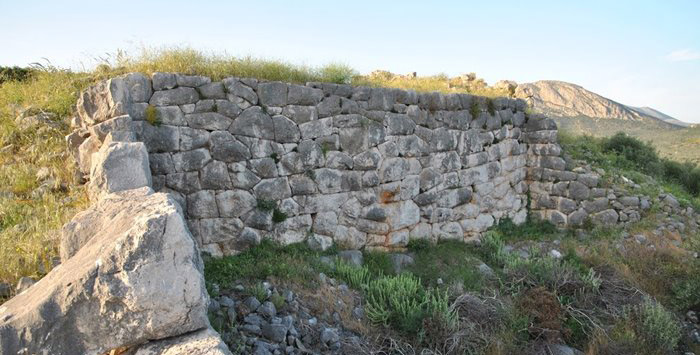
The Castle in Nea Epidavros is an important attraction which came to the possession of Venice in 1205, after the Byzantine period when its walls were reinforced.
On the beach “Kalymnios” in the sea and in shallow deep located the ancient city. Waters peeking remnants, either by boat or by swimming. In some places still preserved the ancient breakwater. With a dive mask you can admire in a depth of only two meters, the well-preserved sunken buildings of Sunken state.